Optometry 360
  • Home
  • Conferences
  • Videos
  • About Us
    • About Us – Mission
    • Media Partners
    • Advisory Board
    • Industry Council
    • Business Team

What are you looking for?

  • Conference Roundup
  • Contact Lenses
  • Diagnostics
  • Glaucoma
  • Myopia
  • Neurotrophic Keratitis
  • Ocular Surface Disease
  • Pediatrics
  • Practice Management
  • Presbyopia
  • Retina
  • Spotlight Series
The evolving role of the optometrist in nonsurgical cataract management
Optometry 360
  • Home
  • Conferences
  • Videos
  • About Us
    • About Us – Mission
    • Media Partners
    • Advisory Board
    • Industry Council
    • Business Team
Home > DOT spectacle lenses shown to effectively reduce myopia progression in children over four years
  • Myopia

DOT spectacle lenses shown to effectively reduce myopia progression in children over four years

Kelsey Moroz

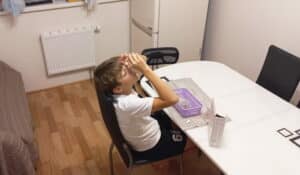
The Diffusion Optics Technology (DOT) spectacle lenses effectively slow myopia progression in children over a 4-year period, according to a study.

The study evaluated the effectiveness of Diffusion Optics Technology (DOT) spectacle lenses in controlling myopia progression in children. The CYPRESS trial (Part 1 and 2) involved 256 children aged 6-10, comparing 2 DOT lens designs (Test 1, Test 2) against standard single-vision lenses. After 3 years, 200 participants continued into the fourth year.

Test 1 lenses were found to be significantly more effective than the control lenses in reducing myopia, with a notable difference in axial length and cycloplegic spherical equivalent refraction across the 4 years. The study also noted that the COVID-19 pandemic likely impacted the treatment’s effectiveness in the second and third years due to public health restrictions.

Overall, DOT lenses were deemed safe and effective.

Reference
Laughton D, Hill JS, McParland M, et al. Control of myopia using diffusion optics spectacle lenses: 4-year results of a multicentre randomised controlled, efficacy and safety study (CYPRESS). BMJ Open Ophthalmol. 2024;9(1):e001790. doi: 10.1136/bmjophth-2024-001790. PMID: 39384223.

Share

Related Content

  • Contact Lenses

DIMS spectacle lenses noninferior to orthokeratology for slowing myopia progression in children

  • Myopia

Long-term DIMS lens users report high satisfaction despite cost barrier

  • Myopia

Low-dose atropine slowed myopia progression in children with advanced myopia in pilot trial

  • Myopia

Red-light therapy outperforms low-dose atropine in altering macular morphology

  • Myopia

Axial length monitoring may help assess myopia control success in clinical practice

  • Myopia

Switching myopia-control spectacles may temporarily slow progression in some children

Share

Advisory Board

Kaleb Abbott, OD, MS, FAAO

Clark Chang, OD

Jessica Haynes, OD, FAAO, FORS, Dipl ABO

Monica Kalia, OD

Cecelia Koetting, OD, FAAO, DipABO

Roya Attar, OD, MBA, DHA, FAAO

Hardeep Kataria, OD, FAAO

Marc R. Bloomenstein, OD, FAAO

Elise Kramer, OD

See All
Optometry 360

Optometry 360® is a dynamic digital platform dedicated to advancing the field of eye care.

Get to Know Us

  • Home
  • About Us
  • Media Partners
  • Advertising Policy
  • Our Advisory Board

Sign up for our Newsletter

Sign up for our Newsletter to get our newest articles instantly!

  • Privacy Policy
  • Advertising Policy
  • Medical Disclaimer
IHM Logo

© 2026 Optometry 360 is a trademark of International Healthcare Media, LLC. All rights Reserved

  • MedJournal360 Icon
  • RareDisease360 Icon
  • MyHero360 Icon
  • Optometry360 Icon
  • Ophthalmology360 Icon