Optometry 360
  • Home
  • Conferences
  • Videos
  • About Us
    • About Us – Mission
    • Media Partners
    • Advisory Board
    • Industry Council
    • Business Team

What are you looking for?

  • Conference Roundup
  • Contact Lenses
  • Diagnostics
  • Glaucoma
  • Myopia
  • Neurotrophic Keratitis
  • Ocular Surface Disease
  • Pediatrics
  • Practice Management
  • Presbyopia
  • Retina
  • Spotlight Series
Navigating Presbyopia Conversations with Patients in Practice
Optometry 360
  • Home
  • Conferences
  • Videos
  • About Us
    • About Us – Mission
    • Media Partners
    • Advisory Board
    • Industry Council
    • Business Team
Home > Low-dose atropine linked to sustained myopia control and minimal rebound
  • Myopia

Low-dose atropine linked to sustained myopia control and minimal rebound

Optometry 360

Key Takeaways

  1. Atropine 0.01% to 0.05% slowed myopia progression over 2 years with minimal post-treatment rebound.
  2. Higher-dose atropine and repeated low-intensity red-light therapy had greater short-term efficacy but meaningful rebound after treatment cessation.

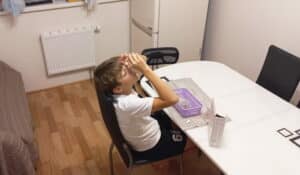
Atropine eye drops at concentrations of 0.01% to 0.05% slowed pediatric myopia progression over 2 years and were not associated with clinically meaningful rebound after treatment cessation, according to a study.

The systematic review identified 117 randomized controlled trials evaluating 24 active interventions. After exclusions for missing outcomes or violations of the transitivity assumption, 22 trials and 1 study arm were omitted from quantitative synthesis.

Atropine concentrations of at least 0.01% significantly slowed myopia progression over 2 years compared with inactive controls. Greater efficacy was observed at higher doses. These effects were numerically greater than those of optical interventions, although the differences were not statistically significant.

Moderate- to high-dose atropine and repeated low-intensity red-light therapy, either alone or combined with orthokeratology, demonstrated stronger short-term effects but were followed by clinically meaningful rebound 12 months after treatment ended. Low-dose atropine was not associated with clinically meaningful rebound.

Reference

Jovanović J, Zacharioudaki M, Kalatzi M, et al. Low-Dose Atropine and Other Interventions for Pediatric Myopia: A Systematic Review and Bayesian Network Meta-analysis of Efficacy and Post-treatment Outcomes. Ophthalmol Ther. 2026;doi: 10.1007/s40123-026-01478-y. Epub ahead of print. PMID: 42704413.

Share

Related Content

  • Contact Lenses

DIMS spectacle lenses noninferior to orthokeratology for slowing myopia progression in children

  • Myopia

Long-term DIMS lens users report high satisfaction despite cost barrier

  • Myopia

Low-dose atropine slowed myopia progression in children with advanced myopia in pilot trial

  • Myopia

Red-light therapy outperforms low-dose atropine in altering macular morphology

  • Myopia

Axial length monitoring may help assess myopia control success in clinical practice

  • Myopia

Switching myopia-control spectacles may temporarily slow progression in some children

Share

Advisory Board

Kaleb Abbott, OD, MS, FAAO

Clark Chang, OD

Jessica Haynes, OD, FAAO, FORS, Dipl ABO

Monica Kalia, OD

Cecelia Koetting, OD, FAAO, DipABO

Roya Attar, OD, MBA, DHA, FAAO

Hardeep Kataria, OD, FAAO

Marc R. Bloomenstein, OD, FAAO

Elise Kramer, OD

See All
Optometry 360

Optometry 360® is a dynamic digital platform dedicated to advancing the field of eye care.

Get to Know Us

  • Home
  • About Us
  • Media Partners
  • Advertising Policy
  • Our Advisory Board

Sign up for our Newsletter

Sign up for our Newsletter to get our newest articles instantly!

  • Privacy Policy
  • Advertising Policy
  • Medical Disclaimer
IHM Logo

© 2026 Optometry 360 is a trademark of International Healthcare Media, LLC. All rights Reserved

  • MedJournal360 Icon
  • RareDisease360 Icon
  • MyHero360 Icon
  • Optometry360 Icon
  • Ophthalmology360 Icon