Optometry 360
  • Home
  • Conferences
  • Videos
  • About Us
    • About Us – Mission
    • Media Partners
    • Advisory Board
    • Industry Council
    • Business Team

What are you looking for?

  • Conference Roundup
  • Contact Lenses
  • Diagnostics
  • Glaucoma
  • Myopia
  • Neurotrophic Keratitis
  • Ocular Surface Disease
  • Pediatrics
  • Practice Management
  • Presbyopia
  • Retina
  • Spotlight Series
The evolving role of the optometrist in nonsurgical cataract management
Optometry 360
  • Home
  • Conferences
  • Videos
  • About Us
    • About Us – Mission
    • Media Partners
    • Advisory Board
    • Industry Council
    • Business Team
Home > Thirty minutes of tablet use reduces tear film stability in myopic children
  • Myopia

Thirty minutes of tablet use reduces tear film stability in myopic children

Kelsey Moroz

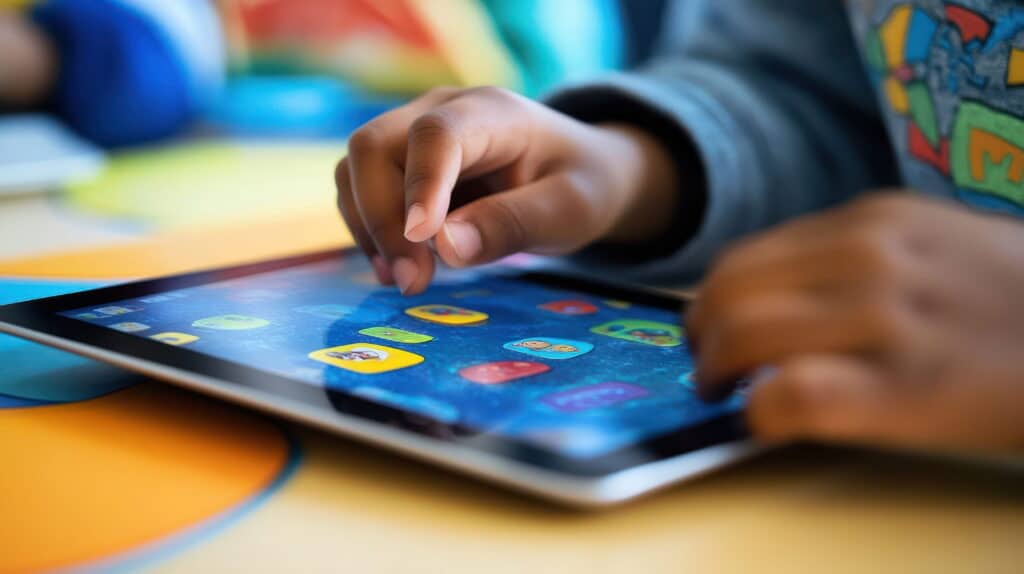
Thirty minutes of tablet use in children with myopia reduced tear film stability and worsened some symptoms of eye strain, according to a study, which also found a higher screen correlated color temperature (CCT) was associated with a small increase in near work-induced transient myopia (NITM).

Researchers evaluated 24 myopic children who watched a 30-minute video on tablets set to either a low CCT (2800 K) or high CCT (8500 K) on separate days. Measurements of NITM, binocular vision function, tear break-up time (TBUT), and asthenopia symptoms were recorded before and immediately after each viewing session.

A significant interaction between CCT setting and examination time was observed for NITM, with the high-CCT tablet producing a greater increase in initial NITM after viewing compared with the low-CCT tablet. No significant effects of CCT were found for other visual function measures, TBUT, or asthenopia symptom scores.

Regardless of screen setting, the 30-minute tablet task reduced TBUT and aggravated some eye strain symptoms. The investigators noted that although the high-CCT tablet resulted in a statistically significant increase in initial NITM, the magnitude of the difference was small and its clinical relevance remains uncertain.

Reference
Chen Y, Mei L, Feng Y, et al. Impact of tablet’s correlated color temperature on ocular and visual function in myopic children: a pilot study. Front Med (Lausanne). 2026;13:1804663. doi: 10.3389/fmed.2026.1804663. PMID: 42210963; PMCID: PMC13212085.

Share

Related Content

  • Myopia

Red-light therapy outperforms low-dose atropine in altering macular morphology

  • Myopia

Axial length monitoring may help assess myopia control success in clinical practice

  • Myopia

Switching myopia-control spectacles may temporarily slow progression in some children

  • Contact Lenses

Extended-wear rigid gas-permeable lenses show long-term viability in pediatric aphakia

  • Myopia

Height growth timing may inform management of axial elongation in pediatric myopia patients

  • Myopia

MRI-defined eye shape predicts long-term outcomes in high myopia

Share

Advisory Board

Kaleb Abbott, OD, MS, FAAO

Clark Chang, OD

Jessica Haynes, OD, FAAO, FORS, Dipl ABO

Monica Kalia, OD

Cecelia Koetting, OD, FAAO, DipABO

Roya Attar, OD, MBA, DHA, FAAO

Hardeep Kataria, OD, FAAO

Marc R. Bloomenstein, OD, FAAO

Elise Kramer, OD

See All
Optometry 360

Optometry 360® is a dynamic digital platform dedicated to advancing the field of eye care.

Get to Know Us

  • Home
  • About Us
  • Media Partners
  • Advertising Policy
  • Our Advisory Board

Sign up for our Newsletter

Sign up for our Newsletter to get our newest articles instantly!

  • Privacy Policy
  • Advertising Policy
  • Medical Disclaimer
IHM Logo

© 2026 Optometry 360 is a trademark of International Healthcare Media, LLC. All rights Reserved

  • MedJournal360 Icon
  • RareDisease360 Icon
  • MyHero360 Icon
  • Optometry360 Icon
  • Ophthalmology360 Icon