Optometry 360
  • Home
  • Conferences
  • Videos
  • About Us
    • About Us – Mission
    • Media Partners
    • Advisory Board
    • Industry Council
    • Business Team

What are you looking for?

  • Conference Roundup
  • Contact Lenses
  • Diagnostics
  • Glaucoma
  • Myopia
  • Neurotrophic Keratitis
  • Ocular Surface Disease
  • Pediatrics
  • Practice Management
  • Presbyopia
  • Retina
  • Spotlight Series
The evolving role of the optometrist in nonsurgical cataract management
Optometry 360
  • Home
  • Conferences
  • Videos
  • About Us
    • About Us – Mission
    • Media Partners
    • Advisory Board
    • Industry Council
    • Business Team
Home > Autologous serum eye drops improve symptoms and corneal nerve parameters in neurotrophic keratitis
  • Neurotrophic Keratitis

Autologous serum eye drops improve symptoms and corneal nerve parameters in neurotrophic keratitis


Optometry 360

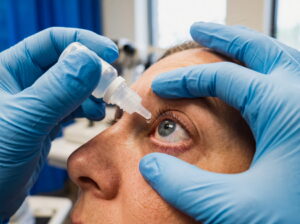
Treatment with 20% autologous serum eye drops (ASED) for 2 months improved ocular surface measures, corneal sensitivity, and corneal nerve parameters in patients with paralytic lagophthalmos (PL) and neurotrophic keratitis (NK), according to a study.

The study included 11 patients with unilateral PL and NK; 10 completed the 2-month course of treatment.

After treatment, Schirmer I test values increased from a mean of 10.3 mm to 19.7 mm (P = 0.041), Ocular Surface Disease Index scores improved from 21.1 to 17.0 (P = 0.009), and central corneal sensitivity improved from 3.4 mm to 5.0 mm (P = 0.005). In vivo confocal microscopy also showed significant increases in corneal nerve fiber length (11.1 to 14.7 mm/mm²; P = 0.006) and corneal nerve fiber density (23.1 to 33.8 fibers/mm²; P = 0.012). One patient discontinued treatment because of ocular discomfort.

Reference

Lucchino L, Mastrogiuseppe E, Giovannetti F, et al. Corneal nerve regeneration and ocular surface restoration following treatment with autologous serum eye drops in patients with paralytic lagophthalmos and neurotrophic keratitis. Graefes Arch Clin Exp Ophthalmol. 2026 Jul 17. doi: 10.1007/s00417-026-07388-w. Epub ahead of print. PMID: 42467196.

Share

Related Content

  • Neurotrophic Keratitis

Cenegermin improves corneal healing in moderate to severe neurotrophic keratitis

  • Neurotrophic Keratitis

Shelf-stable amniotic membrane improved outcomes in early-stage neurotrophic keratopathy

  • Neurotrophic Keratitis

Amniotic membrane improves severe autoimmune-related KCS and NK outcomes

  • Neurotrophic Keratitis

Systemic abnormalities commonly found in neurotrophic keratopathy patients, study finds

  • Neurotrophic Keratitis

Novel anterior keratoplasty approach supports healing in refractory ocular surface disease

  • Neurotrophic Keratitis

If you have a dry eye patient without typical pain presentation, consider neurotrophic keratitis and this treatment option

Share

Advisory Board

Kaleb Abbott, OD, MS, FAAO

Clark Chang, OD

Jessica Haynes, OD, FAAO, FORS, Dipl ABO

Monica Kalia, OD

Cecelia Koetting, OD, FAAO, DipABO

Roya Attar, OD, MBA, DHA, FAAO

Hardeep Kataria, OD, FAAO

Marc R. Bloomenstein, OD, FAAO

Elise Kramer, OD

See All
Optometry 360

Optometry 360® is a dynamic digital platform dedicated to advancing the field of eye care.

Get to Know Us

  • Home
  • About Us
  • Media Partners
  • Advertising Policy
  • Our Advisory Board

Sign up for our Newsletter

Sign up for our Newsletter to get our newest articles instantly!

  • Privacy Policy
  • Advertising Policy
  • Medical Disclaimer
IHM Logo

© 2026 Optometry 360 is a trademark of International Healthcare Media, LLC. All rights Reserved

  • MedJournal360 Icon
  • RareDisease360 Icon
  • MyHero360 Icon
  • Optometry360 Icon
  • Ophthalmology360 Icon