Optometry 360
  • Home
  • Conferences
  • Videos
  • About Us
    • About Us – Mission
    • Media Partners
    • Advisory Board
    • Industry Council
    • Business Team

What are you looking for?

  • Conference Roundup
  • Contact Lenses
  • Diagnostics
  • Glaucoma
  • Myopia
  • Neurotrophic Keratitis
  • Ocular Surface Disease
  • Pediatrics
  • Practice Management
  • Presbyopia
  • Retina
  • Spotlight Series
The evolving role of the optometrist in nonsurgical cataract management
Optometry 360
  • Home
  • Conferences
  • Videos
  • About Us
    • About Us – Mission
    • Media Partners
    • Advisory Board
    • Industry Council
    • Business Team
Home > Lens decentration linked to fluid reservoir depth, study finds
  • Contact Lenses

Lens decentration linked to fluid reservoir depth, study finds

Kelsey Moroz

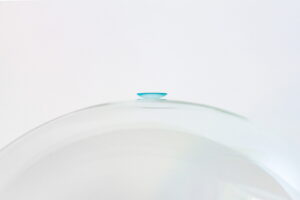
The central fluid reservoir depth of a scleral lens has the most significant impact on lens decentration, according to a study.

A greater initial fluid reservoir depth leads to more lens decentration, especially inferiorly. In contrast, variations in lens thickness, mass, or the addition of a peripheral fenestration have minimal effect on lens centration when controlling for fluid reservoir depth.

The study included 10 young, healthy participants who underwent a series of short-term (90 minutes) open-eye scleral lens trials. Throughout these trials, the scleral lens parameters were kept constant, while variations in central fluid reservoir depth (ranging from 144 to 726 μm), lens thickness (150 to 1200 μm), lens mass (101 to 241 mg), and lens design (with or without a 0.3 mm peripheral fenestration) were introduced. Lens decentration was assessed using over-topography maps.

On average, scleral lens centration shifted by less than 0.10 mm during 90 minutes of wear. However, lenses with medium and high central fluid reservoir depths experienced 0.17 mm more temporal and 0.55 mm more inferior decentration compared to those with low reservoir depths (P < 0.001). Changes in lens thickness or the addition of a peripheral fenestration did not cause notable alterations in centration (<0.10 mm) when fluid reservoir depth was accounted for. Central fluid reservoir depth was the strongest predictor of both horizontal and vertical lens decentration, accounting for 62-73% of the variation, while lens thickness and mass accounted for 40-44%.

Reference
Fisher D, Collins MJ, Vincent SJ. The effect of lens and fitting characteristics upon scleral lens centration. Ophthalmic Physiol Opt. 2024;doi: 10.1111/opo.13367. Epub ahead of print. PMID: 39033320.

Share

Related Content

  • Contact Lenses

DIMS spectacle lenses noninferior to orthokeratology for slowing myopia progression in children

  • Contact Lenses

Extended-wear rigid gas-permeable lenses show long-term viability in pediatric aphakia

  • Contact Lenses

Eyelid disease common among habitual scleral lens wearers, study finds

  • Contact Lenses

Weekly toric lenses maintain satisfaction after switch from biweekly wear

  • Contact Lenses

Women in midlife show larger differences between preferred and full refractive correction

  • Ocular Surface Disease

Ocular surface microbiome remains stable in contact lens wearers

Share

Advisory Board

Kaleb Abbott, OD, MS, FAAO

Clark Chang, OD

Jessica Haynes, OD, FAAO, FORS, Dipl ABO

Monica Kalia, OD

Cecelia Koetting, OD, FAAO, DipABO

Roya Attar, OD, MBA, DHA, FAAO

Hardeep Kataria, OD, FAAO

Marc R. Bloomenstein, OD, FAAO

Elise Kramer, OD

See All
Optometry 360

Optometry 360® is a dynamic digital platform dedicated to advancing the field of eye care.

Get to Know Us

  • Home
  • About Us
  • Media Partners
  • Advertising Policy
  • Our Advisory Board

Sign up for our Newsletter

Sign up for our Newsletter to get our newest articles instantly!

  • Privacy Policy
  • Advertising Policy
  • Medical Disclaimer
IHM Logo

© 2026 Optometry 360 is a trademark of International Healthcare Media, LLC. All rights Reserved

  • MedJournal360 Icon
  • RareDisease360 Icon
  • MyHero360 Icon
  • Optometry360 Icon
  • Ophthalmology360 Icon