Optometry 360
  • Home
  • Conferences
  • Videos
  • About Us
    • About Us – Mission
    • Media Partners
    • Advisory Board
    • Industry Council
    • Business Team

What are you looking for?

  • Conference Roundup
  • Contact Lenses
  • Diagnostics
  • Glaucoma
  • Myopia
  • Neurotrophic Keratitis
  • Ocular Surface Disease
  • Pediatrics
  • Practice Management
  • Presbyopia
  • Retina
  • Spotlight Series
The evolving role of the optometrist in nonsurgical cataract management
Optometry 360
  • Home
  • Conferences
  • Videos
  • About Us
    • About Us – Mission
    • Media Partners
    • Advisory Board
    • Industry Council
    • Business Team
Home > Women in midlife show larger differences between preferred and full refractive correction
  • Contact Lenses

Women in midlife show larger differences between preferred and full refractive correction

Kelsey Moroz

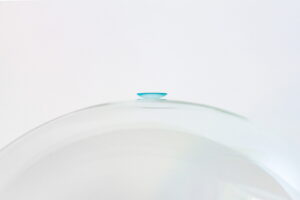
Women aged 40–59 years tend to prefer a greater degree of under-correction in their contact lens prescriptions for presbyopia than men, according to a study.

Researchers evaluated near add power and preferred contact lens power in 3,082 participants, including 768 men and 2,314 women. Participants were divided into 3 age groups (20–39, 40–59, and 60–79 years). Investigators calculated the difference (Δ lens power) between the preferred corrective power of contact lenses and the power required for full refractive correction.

Sex-related differences were most evident in the 40–59-year age group. In this group, Δ lens power was significantly larger in women than in men (P < 0.05), and visual acuity with contact lenses was lower in women (P < 0.05). Men in the same age range showed greater astigmatic errors and anisometropia than women. Mean near add power did not differ between sexes across any age group.

Ocular surface parameters were generally worse in women than in men, except for the Shirmer test. Regression analysis showed that Δ lens power in women was associated with myopic spherical equivalent, astigmatic errors, anisometropia, near add power, contact lens power, and visual acuity with contact lenses. In men, Δ lens power was associated with myopic spherical equivalent, astigmatic errors, visual acuity with contact lenses, and tear break-up time. Age was not identified as a significant factor for either sex.

Reference
Ayaki M, Hanyuda A, Negishi K. Sex Differences in Preferred Under-Correction of Contact Lenses and Their Potential Relevance to Presbyopia Management. Clin Optom (Auckl). 2026;18:575883. doi: 10.2147/OPTO.S575883. PMID: 41788900; PMCID: PMC12956865.

Share

Related Content

  • Presbyopia

Spotlight on TECNIS Odyssey™

  • Contact Lenses

Extended-wear rigid gas-permeable lenses show long-term viability in pediatric aphakia

  • Contact Lenses

Eyelid disease common among habitual scleral lens wearers, study finds

  • Presbyopia

Drinking habit associated with faster progression of presbyopia in adults

  • Presbyopia

From readers to topical pharmaceuticals: a new dawn in presbyopia care

  • Presbyopia

Modeling and clinical data align on optimal pupil size for presbyopia therapy

Share

Advisory Board

Kaleb Abbott, OD, MS, FAAO

Clark Chang, OD

Jessica Haynes, OD, FAAO, FORS, Dipl ABO

Monica Kalia, OD

Cecelia Koetting, OD, FAAO, DipABO

Roya Attar, OD, MBA, DHA, FAAO

Hardeep Kataria, OD, FAAO

Marc R. Bloomenstein, OD, FAAO

Elise Kramer, OD

See All
Optometry 360

Optometry 360® is a dynamic digital platform dedicated to advancing the field of eye care.

Get to Know Us

  • Home
  • About Us
  • Media Partners
  • Advertising Policy
  • Our Advisory Board

Sign up for our Newsletter

Sign up for our Newsletter to get our newest articles instantly!

  • Privacy Policy
  • Advertising Policy
  • Medical Disclaimer
IHM Logo

© 2026 Optometry 360 is a trademark of International Healthcare Media, LLC. All rights Reserved

  • MedJournal360 Icon
  • RareDisease360 Icon
  • MyHero360 Icon
  • Optometry360 Icon
  • Ophthalmology360 Icon