
Optometry 360
  • Home
  • Conferences
  • Videos
  • About Us
    • About Us – Mission
    • Media Partners
    • Advisory Board
    • Industry Council
    • Business Team

What are you looking for?

  • Conference Roundup
  • Contact Lenses
  • Diagnostics
  • Glaucoma
  • Myopia
  • Neurotrophic Keratitis
  • Ocular Surface Disease
  • Pediatrics
  • Practice Management
  • Presbyopia
  • Retina
  • Spotlight Series
Navigating Presbyopia Conversations with Patients in Practice
Optometry 360
  • Home
  • Conferences
  • Videos
  • About Us
    • About Us – Mission
    • Media Partners
    • Advisory Board
    • Industry Council
    • Business Team
Home > Demographic and clinical factors linked to low-dose atropine treatment in children
  • Myopia

Demographic and clinical factors linked to low-dose atropine treatment in children

Optometry 360

Key Takeaways

  1. Asian race, male sex, younger age, and lower neighborhood deprivation were associated with higher odds of low-dose atropine treatment.
  2. • Low-dose atropine treatment was associated with slower myopia progression.
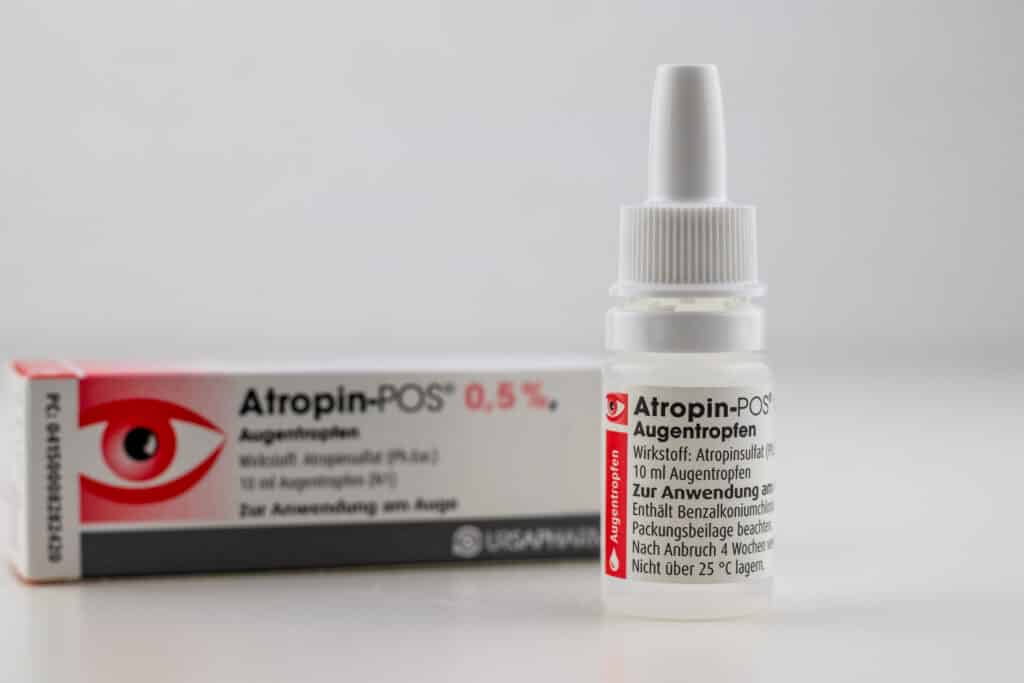
Demographic, socioeconomic, and clinical factors were associated with both the likelihood of receiving low-dose atropine and the rate of myopia progression amongst pediatric patients in a retrospective analysis.

The data presented at AAO 2026, found that Asian race, male sex, younger age, and lower neighborhood deprivation were associated with greater odds of treatment, and treatment was associated with slower myopia progression.

Among 3,308 patients aged 3 to 17 who received low-dose atropine between January 2017 and June 2023, Asian race, male sex, younger age, and lower neighborhood deprivation index were associated with higher adjusted odds of treatment (all P < 0.001). Astigmatism and amblyopia were associated with lower odds of treatment (adjusted odds ratio, 0.74 and 0.63, respectively; both P < 0.01).

Slower myopia progression was associated with low-dose atropine treatment (0.07 D/year; P < 0.01), increasing age (0.05 D/year; P < 0.01), male sex (0.05 D/year; P = 0.006), and amblyopia (0.08 D/year; P = 0.019).

Reference

Muminovic I, et al. Effectiveness and Implementation of a Myopia Control Program in an Integrated Health-Care System in Northern California. Presented at: American Academy of Ophthalmology 2026 Annual Meeting; October 9-12, 2026; New Orleans, LA.

Share

Related Content

  • Conference Roundup

How to have meaningful conversations with patients about holistic management of their glaucoma

  • Conference Roundup

Affects dry eye can have on patients’ quality of life and more highlights from Academy 2026

  • Conference Roundup

Advances in glaucoma: a case-based session

  • Myopia

Theialife plans Phase 3 trials of oral ND10 for progressive pediatric myopia

  • Myopia

High-dose atropine plus dual-focus lenses show minimal myopia progression

  • Conference Roundup

Why you should be talking to your patients in perimenopause about presbyopia

Share

Advisory Board

Kaleb Abbott, OD, MS, FAAO

Clark Chang, OD

Jessica Haynes, OD, FAAO, FORS, Dipl ABO

Monica Kalia, OD

Cecelia Koetting, OD, FAAO, DipABO

Roya Attar, OD, MBA, DHA, FAAO

Hardeep Kataria, OD, FAAO

Marc R. Bloomenstein, OD, FAAO

Elise Kramer, OD

See All
Optometry 360

Optometry 360® is a dynamic digital platform dedicated to advancing the field of eye care.

Get to Know Us

  • Home
  • About Us
  • Media Partners
  • Advertising Policy
  • Our Advisory Board

Sign up for our Newsletter

Sign up for our Newsletter to get our newest articles instantly!

  • Privacy Policy
  • Advertising Policy
  • Medical Disclaimer
IHM Logo

© 2026 Optometry 360 is a trademark of International Healthcare Media, LLC. All rights Reserved

  • MedJournal360 Icon
  • RareDisease360 Icon
  • MyHero360 Icon
  • Optometry360 Icon
  • Ophthalmology360 Icon