Optometry 360
  • Home
  • Conferences
  • Videos
  • About Us
    • About Us – Mission
    • Media Partners
    • Advisory Board
    • Industry Council
    • Business Team

What are you looking for?

  • Conference Roundup
  • Contact Lenses
  • Diagnostics
  • Glaucoma
  • Myopia
  • Neurotrophic Keratitis
  • Ocular Surface Disease
  • Pediatrics
  • Practice Management
  • Presbyopia
  • Retina
  • Spotlight Series
The evolving role of the optometrist in nonsurgical cataract management
Optometry 360
  • Home
  • Conferences
  • Videos
  • About Us
    • About Us – Mission
    • Media Partners
    • Advisory Board
    • Industry Council
    • Business Team
Home > Eyelid surgery linked to nerve recovery in patients with neurotrophic keratopathy
  • Neurotrophic Keratitis

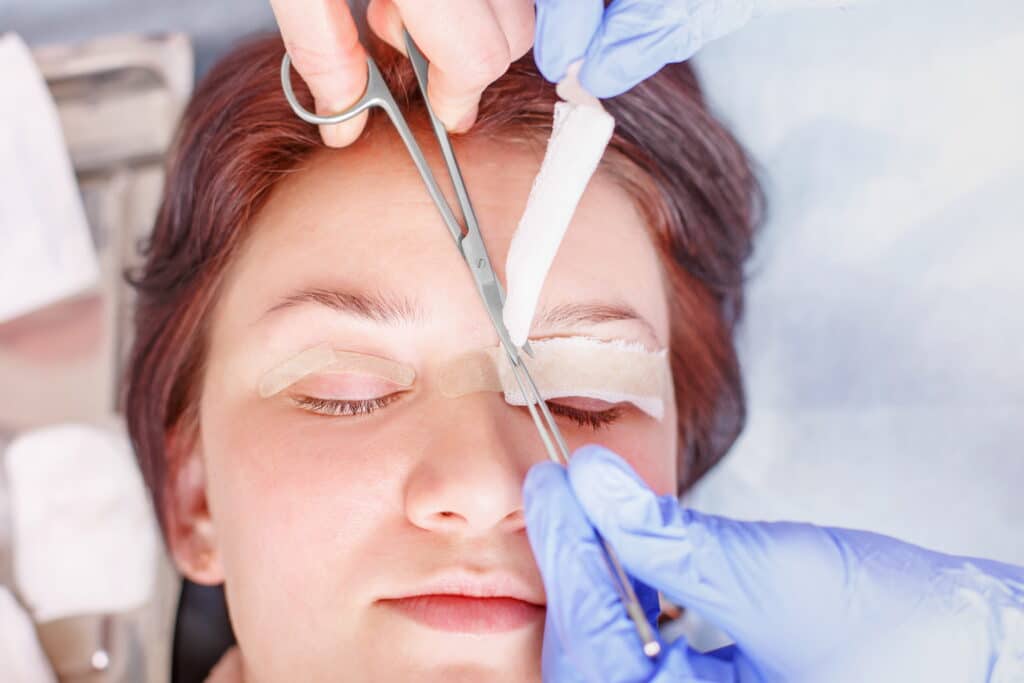
Eyelid surgery linked to nerve recovery in patients with neurotrophic keratopathy

Kelsey Moroz

In a small case series, comprehensive eyelid surgery in patients preganglionic facial nerve palsy complicated by preganglionic trigeminal nerve palsy was associated with improvement in corneal sensation and trophic function.

The series included 3 patients with longstanding preganglionic facial nerve palsy and preganglionic trigeminal nerve palsy, with a mean disease duration of 28.3 months. All patients had eyelid abnormalities related to facial nerve palsy and underwent comprehensive eyelid surgery to address these sequelae.

At presentation, 2 of the 3 patients had complete absence of corneal sensation, and the third had reduced sensation. All cases showed absent trophic nerve function. Corneal sub-basal nerve plexus density was measured with in vivo confocal microscopy in 1 patient.

Following surgery, markers of trophic function began to improve after a mean of 19 days. Recovery of corneal sensation was observed later, with an average onset of 10 months postoperatively across the 3 patients. In the patient who underwent confocal imaging, corneal sub-basal nerve plexus nearly doubled 6 months after surgery.

Reference
Moledina M, Lim C, Dua HS, et al. Recovery of corneal sensation following eyelid surgery for neurotrophic keratopathy and preganglionic facial palsy. Br J Ophthalmol. 2026;bjo-2025-328162. doi: 10.1136/bjo-2025-328162. Epub ahead of print. PMID: 41667221.

Share

Related Content

  • Neurotrophic Keratitis

Autologous serum eye drops improve symptoms and corneal nerve parameters in neurotrophic keratitis

  • Neurotrophic Keratitis

Cenegermin improves corneal healing in moderate to severe neurotrophic keratitis

  • Neurotrophic Keratitis

Shelf-stable amniotic membrane improved outcomes in early-stage neurotrophic keratopathy

  • Neurotrophic Keratitis

Amniotic membrane improves severe autoimmune-related KCS and NK outcomes

  • Neurotrophic Keratitis

Systemic abnormalities commonly found in neurotrophic keratopathy patients, study finds

  • Neurotrophic Keratitis

Novel anterior keratoplasty approach supports healing in refractory ocular surface disease

Share

Advisory Board

Kaleb Abbott, OD, MS, FAAO

Clark Chang, OD

Jessica Haynes, OD, FAAO, FORS, Dipl ABO

Monica Kalia, OD

Cecelia Koetting, OD, FAAO, DipABO

Roya Attar, OD, MBA, DHA, FAAO

Hardeep Kataria, OD, FAAO

Marc R. Bloomenstein, OD, FAAO

Elise Kramer, OD

See All
Optometry 360

Optometry 360® is a dynamic digital platform dedicated to advancing the field of eye care.

Get to Know Us

  • Home
  • About Us
  • Media Partners
  • Advertising Policy
  • Our Advisory Board

Sign up for our Newsletter

Sign up for our Newsletter to get our newest articles instantly!

  • Privacy Policy
  • Advertising Policy
  • Medical Disclaimer
IHM Logo

© 2026 Optometry 360 is a trademark of International Healthcare Media, LLC. All rights Reserved

  • MedJournal360 Icon
  • RareDisease360 Icon
  • MyHero360 Icon
  • Optometry360 Icon
  • Ophthalmology360 Icon