
This Spotlight Series article is editorially independent content supported by Dompé.
With real-world insights from Neel S. Vaidya, MD, MPH, MBA.
Neurotrophic keratitis, also known as neurotrophic keratopathy, is a rare, degenerative corneal disease caused by impaired innervation of the cornea by the trigeminal nerve, resulting in a cascade of effects that may include a breakdown of the corneal epithelium. Neurotrophic keratitis can be caused by herpetic or other infections, ocular or neurologic surgeries, trauma, and some systemic conditions that impair sensation.1-3 If not treated, it can lead to a corneal ulcer, scarring, or even vision loss.3
Oxervate®: Changing the Treatment Paradigm for Neurotrophic Keratitis
Strategies for the management of neurotrophic keratitis depend on the severity of the disease, classified as stage 1 (mild), 2 (moderate), and 3 (severe).3 Treatment options are primarily aimed at stabilizing the condition and preventing progression, which do not target the underlying disease pathology.
Recent advancements, particularly the development of Oxervate (cenegermin-bkbj ophthalmic solution 0.002%; Dompé), have reshaped the therapeutic landscape. Oxervate is a topical biologic and the first and only FDA-approved therapy indicated for the treatment of neurotrophic keratitis.4
The active ingredient in Oxervate is cenegermin-bkbj, a novel recombinant human nerve growth factor that is structurally identical to the nerve growth factor (NGF) protein made in the human body, including ocular tissues. The endogenous protein supports corneal integrity through several mechanisms. NGF acts directly on corneal epithelial cells to stimulate their growth and survival. In addition, NGF is known to bind receptors on lacrimal glands to promote tear production, which may provide the eye with lubrication and natural protection from pathogens and injury.4
Oxervate in Clinical Practice
In managing patients with neurotrophic keratitis, Neel S. Vaidya, MD, MPH, MBA, cataract, cornea, and refractive surgeon at Chicago Cornea Consultants and assistant professor of ophthalmology at Rush University Medical Center, categorizes treatment in “2 buckets—acute and chronic treatments. Acute treatments are what I use to get the defect healed in the short term. Chronic treatments are [those] that help keep the cornea healed long term.”
Short-term treatments he uses include lubrication, punctal occlusion, amniotic membrane products, temporary tarsorraphy, and Oxervate. Chronic treatments include Oxervate, permanent tarsorrhaphy, and corneal neurotization.
“Oxervate fits in very early in my treatment paradigm. In a patient with documented neurotrophic keratitis with decreased corneal sensitivity, I am often starting the process of obtaining Oxervate at the patient’s first visit,” explained Dr. Vaidya. “While this process occurs, I am implementing a variety of other treatments at the same time, so my first-line treatment tends to be a cocktail of multiple modalities.”
Since the 2018 approval of Oxervate, Dr. Vaidya estimates that he has prescribed the medication to 40 to 50 patients.
Efficacy Data
The efficacy and safety of Oxervate were demonstrated in two 8-week randomized, multicenter, double-masked, vehicle-controlled studies—one in Europe (REPARO study) and one in the United States.3,5,6
The REPARO study enrolled 156 patients with stage 2 or 3 disease, who were randomized 1:1:1 to vehicle, Oxervate 10 mcg/mL, or Oxervate 20 mcg/mL. In the US study, 48 patients with neurotrophic persistent epithelial defect with or without stromal thinning were enrolled at 11 clinical centers and randomized 1:1 to vehicle or Oxervate 20 mg/mL. Patients in both studies received study treatment dosed 6 times daily for 8 weeks.3,5,6
In the REPARO and US studies, Oxervate was more effective than vehicle in promoting complete corneal healing. Complete corneal healing was defined as the absence of staining of the corneal lesion and no persistent staining in the rest of the cornea after 8 weeks of treatment.3,5,6
More than half of the patients treated with Oxervate 20 mcg/mL in the REPARO and US studies were completely healed by week 4 (58.0% and 56.5%, respectively). At 8 weeks, up to 72% of patients in the studies were completely healed (see FIGURE).3,5 Furthermore, in the REPARO study, 80% of patients who achieved complete corneal healing during the 8-week treatment cycle remained healed after 1 year.3

Among patients who were healed after 8 weeks of treatment with Oxervate, recurrence took place in approximately 20% of patients in the REPARO study and 14% in the US study.6
“Oxervate has been a game changer,” said Dr. Vaidya. “In my experience, it has been overwhelmingly effective in getting difficult defects to close with relatively good long-term success in maintaining the surface.”
Safety and Tolerability
Oxervate was well tolerated both studies. The most common adverse reaction was eye pain following installation, which was reported in approximately 16% of patients. Eye pain may arise as corneal healing occurs.6
“I do have patients who experience stinging and pain while on Oxervate. Most patients state that the discomfort is tolerable and that it ceases once the course of the medication is completed,” said Dr. Vaidya regarding feedback his patients have shared about their experiences after being prescribed this medication.
Other adverse reactions occurring in 1% to 10% of patients included corneal deposits, foreign body sensation, ocular hyperemia, ocular inflammation, photophobia, tearing, and headache.6
Dosing and Administration
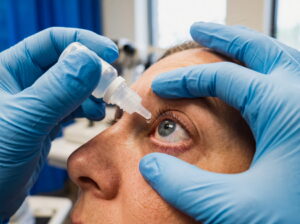
The recommended dose of Oxervate is 1 drop in the affected eye(s) 6 times per day at 2-hour intervals for 8 weeks. Contact lenses should be removed prior to and for at least 15 minutes after administration. If a dose is missed, treatment should be continued as normal at the next scheduled administration.
If more than 1 topical ophthalmic product is being used, administer the eye drops at least 15 minutes apart to avoid diluting products. Administer Oxervate 15 minutes prior to using an eye ointment, gel, or other viscous eye drops.6
For more information, visit https://oxervate.com/hcp.
References
- Bian Y, Ma KK, Hall NE, et al. Neurotrophic keratopathy in the United States: an Intelligent Research in Sight Registry analysis. Ophthalmology. 2022;129(11):1255-1262. doi:10.1016/j.ophtha.2022.06.019
- Dua HS, Said DG, Messmer EM, et al. Neurotrophic keratopathy. Prog Retin Eye Res. 2018;66:107-131. doi:10.1016/j.preteyeres.2018.04.00
- Bonini S, Lambiase A, Rama P, et al; REPARO Study Group. Phase II randomized, double-masked, vehicle-controlled trial of recombinant human nerve growth factor for neurotrophic keratitis. 2018;125(9):1332-1343. doi:10.1016/j.ophtha.2018.02.022
- Dompé receives FDA approval of Oxervate™ eye drops (cenegermin-bkbj ophthalmic solution), first-in-class recombinant human nerve growth factor with potential to completely heal rare neurotrophic keratitis. News release. August 22, 2018. Accessed August 1, 2025. https://www.multivu.com/players/English/8382351-dompe-oxervate-eye-drops-fda-approval/
- Pflugfelder SC, Massaro-Giordano M, Perez VL, et al. Topical recombinant human nerve growth factor (cenegermin) for neurotrophic keratopathy: a multicenter randomized vehicle-controlled pivotal trial. 2020;127(1):14-26. doi:10.1016/j.ophtha.2019.08.020
- Package insert. Dompé U.S. Inc; 2024.
Related Content