Traditional photoscreener outperformed retinal birefringence scanner in pediatric vision screening study

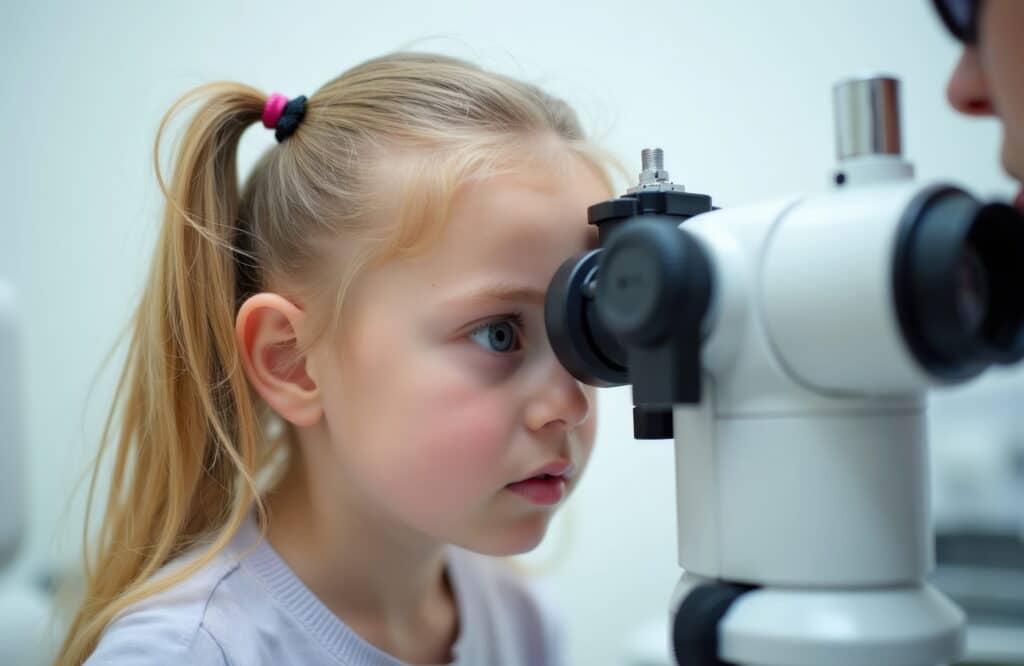
The Spot Vision Screener, a traditional autorefraction-based photoscreening device, showed greater sensitivity than the Blinq vision scanner, which uses retinal birefringence scanning, for detecting amblyopia and visually significant refractive error (VSRE) in children, according to a study.
Participants underwent screening with both devices in randomized order before receiving a comprehensive eye examination.
Among 195 enrolled children, 139 completed both screening tests. The prevalence of amblyopia, strabismus, and VSRE was 15.1%, 32.4%, and 30.1%, respectively.
Compared with the retinal birefringence scanner, the traditional autorefraction device demonstrated higher sensitivity for detecting amblyopia and VSRE. Sensitivity for strabismus detection did not differ significantly between the devices. Researchers also found that the retinal birefringence scanner had lower overall diagnostic performance, particularly for amblyopia detection.
Reference
Oatts JT, Takla P, Yu HN, et al. Diagnostic Accuracy of a Retinal Birefringence Scanning Device Compared With a Traditional Autorefraction Device. JAMA Ophthalmol. 2026;doi: 10.1001/jamaophthalmol.2026.1531. Epub ahead of print. PMID: 42166152.
Related Content