Optometry 360
  • Home
  • Conferences
  • Videos
  • About Us
    • About Us – Mission
    • Media Partners
    • Advisory Board
    • Industry Council
    • Business Team

What are you looking for?

  • Conference Roundup
  • Contact Lenses
  • Diagnostics
  • Glaucoma
  • Myopia
  • Neurotrophic Keratitis
  • Ocular Surface Disease
  • Pediatrics
  • Practice Management
  • Presbyopia
  • Retina
  • Spotlight Series
The evolving role of the optometrist in nonsurgical cataract management
Optometry 360
  • Home
  • Conferences
  • Videos
  • About Us
    • About Us – Mission
    • Media Partners
    • Advisory Board
    • Industry Council
    • Business Team
Home > AI-based diagnostics show promise for early ocular disease detection
  • Diagnostics

AI-based diagnostics show promise for early ocular disease detection

Kelsey Moroz

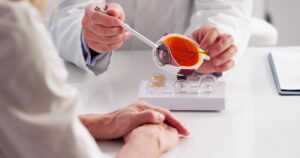
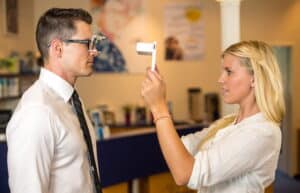
Advances in artificial intelligence (AI), biometric technologies, and tele-optometry may improve early detection and accessibility of eye care, according to a recent review.

Researchers evaluated literature on AI-based image analysis, ocular biometric assessment, and remote ophthalmic screening systems to assess their diagnostic capabilities and clinical relevance. Findings showed that AI algorithms can automate retinal image interpretation and assist in the early detection of ocular disease.

The review also found that biometric evaluation technologies provide precise anatomical measurements that can aid refractive assessment and surgical planning. In addition, tele-optometry platforms were shown to expand access to diagnostic services through remote imaging and consultation, particularly in underserved populations.

According to the review, integrating AI, biometric evaluation, and tele-optometry could strengthen clinical decision-making, improve disease detection, and broaden access to ophthalmic diagnostic services.

Reference
Kar SK, Nemivant K, Sharma UK, et al. Transforming Eye-Care Diagnostics Through Artificial Intelligence, Biometric Evaluation, and Tele-Optometry. Cureus. 2026;18(4):e107620. doi: 10.7759/cureus.107620. PMID: 42186654; PMCID: PMC13198629.

Share

Related Content

  • Diagnostics

Diabetes linked to higher risk of ulcerative keratitis in US study

  • Glaucoma

Review highlights potential role of electrophysiology in early glaucoma detection

  • Diagnostics

Tear biomarkers may help predict response to low-level light therapy after cataract surgery

  • Diagnostics

Traditional photoscreener outperformed retinal birefringence scanner in pediatric vision screening study

  • Diagnostics

Optometrists outperform AI in diagnosing and managing age-related macular degeneration

  • Pediatrics

Researchers identify measurement distance as source of IPD variability

Share

Advisory Board

Kaleb Abbott, OD, MS, FAAO

Clark Chang, OD

Jessica Haynes, OD, FAAO, FORS, Dipl ABO

Monica Kalia, OD

Cecelia Koetting, OD, FAAO, DipABO

Roya Attar, OD, MBA, DHA, FAAO

Hardeep Kataria, OD, FAAO

Marc R. Bloomenstein, OD, FAAO

Elise Kramer, OD

See All
Optometry 360

Optometry 360® is a dynamic digital platform dedicated to advancing the field of eye care.

Get to Know Us

  • Home
  • About Us
  • Media Partners
  • Advertising Policy
  • Our Advisory Board

Sign up for our Newsletter

Sign up for our Newsletter to get our newest articles instantly!

  • Privacy Policy
  • Advertising Policy
  • Medical Disclaimer
IHM Logo

© 2026 Optometry 360 is a trademark of International Healthcare Media, LLC. All rights Reserved

  • MedJournal360 Icon
  • RareDisease360 Icon
  • MyHero360 Icon
  • Optometry360 Icon
  • Ophthalmology360 Icon