Optometry 360
  • Home
  • Conferences
  • Videos
  • About Us
    • About Us – Mission
    • Media Partners
    • Advisory Board
    • Industry Council
    • Business Team

What are you looking for?

  • Conference Roundup
  • Contact Lenses
  • Diagnostics
  • Glaucoma
  • Myopia
  • Neurotrophic Keratitis
  • Ocular Surface Disease
  • Pediatrics
  • Practice Management
  • Presbyopia
  • Retina
  • Spotlight Series
The evolving role of the optometrist in nonsurgical cataract management
Optometry 360
  • Home
  • Conferences
  • Videos
  • About Us
    • About Us – Mission
    • Media Partners
    • Advisory Board
    • Industry Council
    • Business Team
Home > Childhood-onset allergic eye disease linked to greater ocular morbidity
  • Ocular Surface Disease

Childhood-onset allergic eye disease linked to greater ocular morbidity

Optometry 360

Key Takeaways

  1. Childhood-onset allergic eye disease was associated with greater ocular morbidity, including higher rates of limbal involvement, keratoconus, limbal stem cell deficiency, and steroid-induced glaucoma.
  2. Complication risks were substantially higher with childhood-onset disease, with increased odds of keratoconus, limbal stem cell deficiency, and steroid-induced glaucoma compared with adult-onset disease.

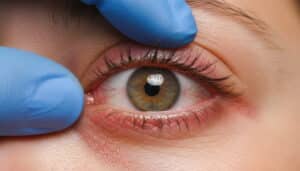
Adults with childhood-onset allergic eye disease (AED) had higher rates of ocular complications than those with adult-onset disease, according to a retrospective study.

Although vernal keratoconjunctivitis was the most common allergy type in both groups, childhood-onset disease was associated with greater limbal involvement and higher odds of several complications.

Of the 5030 adults included, 4475 (89%) had adult-onset AED and 555 (11%) had childhood-onset disease. Male predominance was observed in the childhood-onset group, while no gender difference was seen among those with adult-onset disease.

Limbal involvement occurred more frequently in patients with childhood-onset AED than in those with adult-onset disease (45% vs 16%; P < 0.0001). The most common comorbidities in the childhood-onset group were keratoconus (14.05%), limbal stem cell deficiency (7.74%), and steroid-induced glaucoma (6.66%). In the adult-onset group, the most common comorbidities were ptosis (2.19%), keratoconus (1.87%), and steroid-induced glaucoma (1.29%).

Compared with adult-onset disease, childhood-onset AED was associated with higher odds of keratoconus, limbal stem cell deficiency, and steroid-induced glaucoma (P < 0.001 for all).

Reference

Donthineni PR, Das AV, Basak S, et al. Allergic Eye Disease in Adults: Differences in Clinical Profile Based on the Age of Onset. Cornea. 2026;doi: 10.1097/ICO.0000000000004278. Epub ahead of print. PMID: 42644482.

Share

Related Content

  • Ocular Surface Disease

Smartphone reminders improve short-term artificial tear adherence in dry eye disease

  • Ocular Surface Disease

Perceived stress may precede worsening dry eye symptoms in young adults

  • Ocular Surface Disease

Post-menopausal women show more severe evaporative dry eye disease

  • Ocular Surface Disease

Dry eye diagnostic practices remain inconsistent worldwide, survey finds

  • Ocular Surface Disease

Spotlight on VEVYE®

  • Ocular Surface Disease

Intervening early in dry eye disease: reducing patient cost and disease burden

Share

Advisory Board

Kaleb Abbott, OD, MS, FAAO

Clark Chang, OD

Jessica Haynes, OD, FAAO, FORS, Dipl ABO

Monica Kalia, OD

Cecelia Koetting, OD, FAAO, DipABO

Roya Attar, OD, MBA, DHA, FAAO

Hardeep Kataria, OD, FAAO

Marc R. Bloomenstein, OD, FAAO

Elise Kramer, OD

See All
Optometry 360

Optometry 360® is a dynamic digital platform dedicated to advancing the field of eye care.

Get to Know Us

  • Home
  • About Us
  • Media Partners
  • Advertising Policy
  • Our Advisory Board

Sign up for our Newsletter

Sign up for our Newsletter to get our newest articles instantly!

  • Privacy Policy
  • Advertising Policy
  • Medical Disclaimer
IHM Logo

© 2026 Optometry 360 is a trademark of International Healthcare Media, LLC. All rights Reserved

  • MedJournal360 Icon
  • RareDisease360 Icon
  • MyHero360 Icon
  • Optometry360 Icon
  • Ophthalmology360 Icon