Optometry 360
  • Home
  • Conferences
  • Videos
  • About Us
    • About Us – Mission
    • Media Partners
    • Advisory Board
    • Industry Council
    • Business Team

What are you looking for?

  • Conference Roundup
  • Contact Lenses
  • Diagnostics
  • Glaucoma
  • Myopia
  • Neurotrophic Keratitis
  • Ocular Surface Disease
  • Pediatrics
  • Practice Management
  • Presbyopia
  • Retina
  • Spotlight Series
Navigating Presbyopia Conversations with Patients in Practice
Optometry 360
  • Home
  • Conferences
  • Videos
  • About Us
    • About Us – Mission
    • Media Partners
    • Advisory Board
    • Industry Council
    • Business Team
Home > Manuka honey eye drops improved dry eye symptoms after cataract surgery
  • Ocular Surface Disease

Manuka honey eye drops improved dry eye symptoms after cataract surgery

Kelsey Moroz

Patients who used Leptospermum spp (Manuka) honey eye drops after cataract surgery experienced greater improvement in dry eye symptoms and lower ocular surface inflammation at 1 month compared with those using sodium hyaluronate eye drops, according to a study.

The study included 53 eyes from 53 patients undergoing cataract surgery, with participants consecutively assigned to either Manuka eye drops (25 eyes) or sodium hyaluronate drops (28 eyes). Assessments were performed before surgery and at 1 day, 1 week, and 1 month postoperatively.

At 1 month, the Manuka group demonstrated a greater reduction in Ocular Surface Disease Index (OSDI) scores compared with the control group (-27.3 ± 20.3 vs -4.3 ± 17.4). After adjusting for baseline OSDI score and sex, the Manuka group maintained significantly lower OSDI scores, with an adjusted mean difference of -18.7 (95% CI, -28.8 to -8.7; P = 0.007).

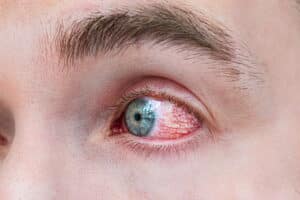
Conjunctival redness was also significantly lower in the Manuka group at 1 month, with an adjusted mean difference of -0.56 (95% CI, -0.91 to -0.21; P = 0.014). However, no significant differences in NIBUT were observed between groups.

Reference

García-Bardera J, García-Bella J, Cuba-Sulluchuco FK, et al. Efficacy of Manuka honey eye drops in managing dry eye disease after cataract surgery: a prospective controlled study. Front Ophthalmol (Lausanne). 2026;6:1812914. doi: 10.3389/fopht.2026.1812914. PMID: 42131280; PMCID: PMC13160837.

Share

Related Content

  • Conference Roundup

Cash-pay dry eye marketing often outpaces available evidence

  • Conference Roundup

Affects dry eye can have on patients’ quality of life and more highlights from Academy 2026

  • Ocular Surface Disease

Apraclonidine 0.125% maintains ocular redness reduction over 8 weeks

  • Ocular Surface Disease

Greater screen use linked to dry eye symptoms in children

  • Ocular Surface Disease

Smartphone reminders improve short-term artificial tear adherence in dry eye disease

  • Ocular Surface Disease

Childhood-onset allergic eye disease linked to greater ocular morbidity

Share

Advisory Board

Kaleb Abbott, OD, MS, FAAO

Clark Chang, OD

Jessica Haynes, OD, FAAO, FORS, Dipl ABO

Monica Kalia, OD

Cecelia Koetting, OD, FAAO, DipABO

Roya Attar, OD, MBA, DHA, FAAO

Hardeep Kataria, OD, FAAO

Marc R. Bloomenstein, OD, FAAO

Elise Kramer, OD

See All
Optometry 360

Optometry 360® is a dynamic digital platform dedicated to advancing the field of eye care.

Get to Know Us

  • Home
  • About Us
  • Media Partners
  • Advertising Policy
  • Our Advisory Board

Sign up for our Newsletter

Sign up for our Newsletter to get our newest articles instantly!

  • Privacy Policy
  • Advertising Policy
  • Medical Disclaimer
IHM Logo

© 2026 Optometry 360 is a trademark of International Healthcare Media, LLC. All rights Reserved

  • MedJournal360 Icon
  • RareDisease360 Icon
  • MyHero360 Icon
  • Optometry360 Icon
  • Ophthalmology360 Icon