Optometry 360
  • Home
  • Conferences
  • Videos
  • About Us
    • About Us – Mission
    • Media Partners
    • Advisory Board
    • Industry Council
    • Business Team

What are you looking for?

  • Conference Roundup
  • Contact Lenses
  • Diagnostics
  • Glaucoma
  • Myopia
  • Neurotrophic Keratitis
  • Ocular Surface Disease
  • Pediatrics
  • Practice Management
  • Presbyopia
  • Retina
  • Spotlight Series
The evolving role of the optometrist in nonsurgical cataract management
Optometry 360
  • Home
  • Conferences
  • Videos
  • About Us
    • About Us – Mission
    • Media Partners
    • Advisory Board
    • Industry Council
    • Business Team
Home > Researchers identify measurement distance as source of IPD variability
  • Pediatrics

Researchers identify measurement distance as source of IPD variability

Kelsey Moroz

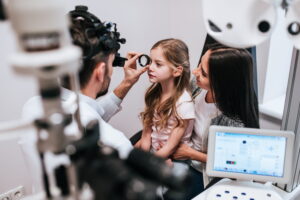
Interpupillary distance (IPD) measurements from the Plusoptix A12R handheld photorefractor can be affected by how far the device is held from the patient, according to a study, which suggests this may be creating a predictable source of error during pediatric vision screening.

Investigators observed variability in IPD readings during a pediatric vision screening program, prompting further evaluation of how measurement distance (MD) affected results.

To investigate, the team developed a model showing a linear relationship between IPD and MD. Bench testing confirmed that shorter measurement distances led to larger IPD values, with a strong correlation between the 2 factors.

The researchers then tested a correction factor designed to adjust for this error. In a small pilot study of 8 participants, applying the correction reduced IPD variability and improved agreement with standard pupilometer measurements.

The authors concluded that measurement distance introduces a systematic error in Plusoptix A12R IPD readings, but this can be effectively corrected to improve clinical reliability.

Reference
Rendo-González S, Garcia-Porta N, Arines J. Improving interpupillary distance accuracy in the plusoptix A12R: A distance-dependent correction. J Optom. 2026;19(3):100613. doi: 10.1016/j.optom.2026.100613. Epub ahead of print. PMID: 42001780.

Share

Related Content

  • Myopia

Axial length monitoring may help assess myopia control success in clinical practice

  • Diagnostics

Diabetes linked to higher risk of ulcerative keratitis in US study

  • Glaucoma

Review highlights potential role of electrophysiology in early glaucoma detection

  • Contact Lenses

Extended-wear rigid gas-permeable lenses show long-term viability in pediatric aphakia

  • Myopia

Thirty minutes of tablet use reduces tear film stability in myopic children

  • Diagnostics

AI-based diagnostics show promise for early ocular disease detection

Share

Advisory Board

Kaleb Abbott, OD, MS, FAAO

Clark Chang, OD

Jessica Haynes, OD, FAAO, FORS, Dipl ABO

Monica Kalia, OD

Cecelia Koetting, OD, FAAO, DipABO

Roya Attar, OD, MBA, DHA, FAAO

Hardeep Kataria, OD, FAAO

Marc R. Bloomenstein, OD, FAAO

Elise Kramer, OD

See All
Optometry 360

Optometry 360® is a dynamic digital platform dedicated to advancing the field of eye care.

Get to Know Us

  • Home
  • About Us
  • Media Partners
  • Advertising Policy
  • Our Advisory Board

Sign up for our Newsletter

Sign up for our Newsletter to get our newest articles instantly!

  • Privacy Policy
  • Advertising Policy
  • Medical Disclaimer
IHM Logo

© 2026 Optometry 360 is a trademark of International Healthcare Media, LLC. All rights Reserved

  • MedJournal360 Icon
  • RareDisease360 Icon
  • MyHero360 Icon
  • Optometry360 Icon
  • Ophthalmology360 Icon