Optometry 360
  • Home
  • Conferences
  • Videos
  • About Us
    • About Us – Mission
    • Media Partners
    • Advisory Board
    • Industry Council
    • Business Team

What are you looking for?

  • Conference Roundup
  • Contact Lenses
  • Diagnostics
  • Glaucoma
  • Myopia
  • Neurotrophic Keratitis
  • Ocular Surface Disease
  • Pediatrics
  • Practice Management
  • Presbyopia
  • Retina
  • Spotlight Series
The evolving role of the optometrist in nonsurgical cataract management
Optometry 360
  • Home
  • Conferences
  • Videos
  • About Us
    • About Us – Mission
    • Media Partners
    • Advisory Board
    • Industry Council
    • Business Team
Home > Triple therapy reduces corneal graft rejection after high-risk keratoplasty
  • Retina

Triple therapy reduces corneal graft rejection after high-risk keratoplasty

Kelsey Moroz

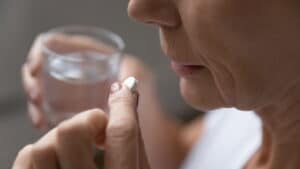
Combining systemic mycophenolate mofetil (MMF) with topical tacrolimus (FK506) and corticosteroid eyedrops significantly reduces the risk of corneal graft rejection and improves graft survival rates in patients undergoing high-risk keratoplasty (HRK), compared to using FK506 and corticosteroids alone, according to a study.

The study included 55 patients with HRK, characterized by large grafts (≥9 mm), vascularized corneas, regrafting, or eccentric grafts. Group 1 (n = 25) received the triple therapy regimen, while Group 2 (n = 30), received only topical FK506 and corticosteroids. Patients were followed for an average of 9.6 months.

Graft rejection occurred in 16% of patients in Group 1 compared to 60% in Group 2. Kaplan-Meier analysis found significantly higher rejection-free survival rates (82.5% in Group 1 vs 37.1% in Group 2, P < 0.01). Similarly, clear graft survival was markedly better in Group 1 (83.6%) than in Group 2 (36.7%, P < 0.01). No severe systemic side effects were reported in either group.

Reference
Zhang JY, Yu K, Jiang XY, et al. Efficacy of mycophenolate mofetil combined with topical 0.05% tacrolimus in high-risk keratoplasty: 1-year cohort study. Int J Ophthalmol. 2024;17(12):2229-2235. doi: 10.18240/ijo.2024.12.10. PMID: 39697894; PMCID: PMC11589437.

Share

Related Content

  • Trending Topics

Aspirin use linked to higher risk of early and dry AMD in genetic analysis

  • Diagnostics

Optometrists outperform AI in diagnosing and managing age-related macular degeneration

  • Retina

AREDS3 and multivitamin coadministration: practical safety, rationale, and clinical guidance for eye care professionals

  • Retina

Academy presentation features a look at 4 cases of retinal lesions

  • Retina

Study highlights link between obesity indicators and risk of retinopathy

  • Retina

AI-powered portable fundus cameras show promise for diabetic retinopathy screening

Share

Advisory Board

Kaleb Abbott, OD, MS, FAAO

Clark Chang, OD

Jessica Haynes, OD, FAAO, FORS, Dipl ABO

Monica Kalia, OD

Cecelia Koetting, OD, FAAO, DipABO

Roya Attar, OD, MBA, DHA, FAAO

Hardeep Kataria, OD, FAAO

Marc R. Bloomenstein, OD, FAAO

Elise Kramer, OD

See All
Optometry 360

Optometry 360® is a dynamic digital platform dedicated to advancing the field of eye care.

Get to Know Us

  • Home
  • About Us
  • Media Partners
  • Advertising Policy
  • Our Advisory Board

Sign up for our Newsletter

Sign up for our Newsletter to get our newest articles instantly!

  • Privacy Policy
  • Advertising Policy
  • Medical Disclaimer
IHM Logo

© 2026 Optometry 360 is a trademark of International Healthcare Media, LLC. All rights Reserved

  • MedJournal360 Icon
  • RareDisease360 Icon
  • MyHero360 Icon
  • Optometry360 Icon
  • Ophthalmology360 Icon