
A comparative study found that repeated low-level red light (RLRL) therapy had the largest estimated effects in slowing progression in children and adolescents with myopia. Potential benefits were also found with posterior scleral reinforcement (PSR), rigid gas permeable (RGP) lenses, and orthokeratology.
Researchers analyzed data from 28 randomized controlled trials and observational studies (2885 eyes of 2202 participants). Overall, 12 interventions were evaluated; the findings for each intervention are summarized below:
–RLRL: Demonstrated the greatest overall effectiveness, producing the largest reduction in axial elongation (-0.43 mm; 95% CI: -0.51 to -0.36) and refractive progression (+0.95 D; 95% CI: +0.68 to +1.22) compared with the control group. Repeated Low-Level Red Light also achieved the highest probability rankings, with SUCRA scores of 95.0% for axial length and 89.6% for refractive outcomes.
–RGP Contact Lenses: Showed a reduction in axial elongation of -0.13 mm (95% CI: -0.21 to -0.05) and refractive progression of +0.83 D (95% CI: +0.52 to +1.14), suggesting a beneficial effect on both outcomes.
–Orthokeratology: Was associated with a reduction in axial elongation (-0.19 mm; 95% CI: -0.26 to -0.12) and refractive progression (+0.36 D; 95% CI: +0.14 to +0.58), indicating benefits in slowing myopia progression.
–Posterior Scleral Reinforcement: Demonstrated improvements in both axial length and refractive outcomes, with a reduction in axial elongation of -0.18 mm (95% CI: -0.24 to -0.13) and refractive progression of +0.55 D (95% CI: +0.38 to +0.73).
–Multifocal Soft Contact Lenses: Provided a modest improvement in refractive progression (+0.42 D; 95% CI: +0.05 to +0.78); however, the reduction in axial elongation (-0.11 mm; 95% CI: -0.24 to +0.02) was not statistically significant.
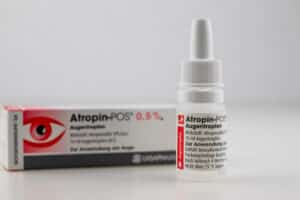
–Atropine 0.01% and Defocus Incorporated Multiple Segments Lenses: Neither intervention demonstrated a statistically significant effect on refractive progression in the reported analysis.
Overall, RLRL emerged as the highest-ranked intervention for controlling both axial elongation and refractive progression. Adverse effects were generally minor, and no serious complications affecting vision were reported.
Reference
Li L, Xiao K, Cui H, et al, Congdon N, Tham YC, Zhu Z. Efficacy and safety of current interventions for high myopia control in children: a systematic review and network meta-analysis. Graefes Arch Clin Exp Ophthalmol. 2026;doi: 10.1007/s00417-026-07612-7. Epub ahead of print. PMID: 43049921.
Related Content