Optometry 360
  • Home
  • Conferences
  • Videos
  • About Us
    • About Us – Mission
    • Media Partners
    • Advisory Board
    • Industry Council
    • Business Team

What are you looking for?

  • Conference Roundup
  • Contact Lenses
  • Diagnostics
  • Glaucoma
  • Myopia
  • Neurotrophic Keratitis
  • Ocular Surface Disease
  • Pediatrics
  • Practice Management
  • Presbyopia
  • Retina
  • Spotlight Series
The evolving role of the optometrist in nonsurgical cataract management
Optometry 360
  • Home
  • Conferences
  • Videos
  • About Us
    • About Us – Mission
    • Media Partners
    • Advisory Board
    • Industry Council
    • Business Team
Home > Single TearCare session boosts clinical outcomes and reading speed in dry eye disease
  • Ocular Surface Disease

Single TearCare session boosts clinical outcomes and reading speed in dry eye disease

Kelsey Moroz

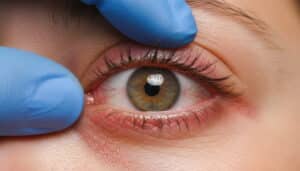
TearCare (TC) treatment significantly improves both clinical outcomes and functional vision in patients with dry eye disease (DED) and meibomian gland dysfunction (MGD), leading to enhanced quality of life and reading ability after just one session, according to a study.

The single-center, prospective study included 32 adults with MGD and DED, characterized by a tear break-up time (TBUT) of <10 seconds. Participants had at least 20/40 vision and had not undergone surgery or received new DED treatments in the 60 days prior to enrollment.

After treatment, 52% of participants showed a clinically significant improvement in reading speed, with >10 words-per-minute increases on the International Reading Speed Texts (IReST) test. Both IReST and Minnesota Low Vision Reading Test results reached statistical significance (P = 0.012 and P = 0.028, respectively). In addition, the Ocular Surface Disease Index (OSDI) scores decreased, and Visual Function Questionnaire-25 scores improved significantly (P < 0.001). All clinical parameters, including meibomian gland secretion scoresand TBUT, also showed marked improvement (P < 0.001).

Reference
Feng Y, Venkateswaran N, Steele A, et al. Impact of TearCare on Reading Speed in Patients with Dry Eye Disease. Clin Ophthalmol. 2024;18:2873-2878. doi: 10.2147/OPTH.S469300. PMID: 39403710; PMCID: PMC11472766.

Share

Related Content

  • Ocular Surface Disease

Childhood-onset allergic eye disease linked to greater ocular morbidity

  • Ocular Surface Disease

Perceived stress may precede worsening dry eye symptoms in young adults

  • Ocular Surface Disease

Post-menopausal women show more severe evaporative dry eye disease

  • Ocular Surface Disease

Dry eye diagnostic practices remain inconsistent worldwide, survey finds

  • Ocular Surface Disease

Spotlight on VEVYE®

  • Ocular Surface Disease

Intervening early in dry eye disease: reducing patient cost and disease burden

Share

Advisory Board

Kaleb Abbott, OD, MS, FAAO

Clark Chang, OD

Jessica Haynes, OD, FAAO, FORS, Dipl ABO

Monica Kalia, OD

Cecelia Koetting, OD, FAAO, DipABO

Roya Attar, OD, MBA, DHA, FAAO

Hardeep Kataria, OD, FAAO

Marc R. Bloomenstein, OD, FAAO

Elise Kramer, OD

See All
Optometry 360

Optometry 360® is a dynamic digital platform dedicated to advancing the field of eye care.

Get to Know Us

  • Home
  • About Us
  • Media Partners
  • Advertising Policy
  • Our Advisory Board

Sign up for our Newsletter

Sign up for our Newsletter to get our newest articles instantly!

  • Privacy Policy
  • Advertising Policy
  • Medical Disclaimer
IHM Logo

© 2026 Optometry 360 is a trademark of International Healthcare Media, LLC. All rights Reserved

  • MedJournal360 Icon
  • RareDisease360 Icon
  • MyHero360 Icon
  • Optometry360 Icon
  • Ophthalmology360 Icon