Optometry 360
  • Home
  • Conferences
  • Videos
  • About Us
    • About Us – Mission
    • Media Partners
    • Advisory Board
    • Industry Council
    • Business Team

What are you looking for?

  • Conference Roundup
  • Contact Lenses
  • Diagnostics
  • Glaucoma
  • Myopia
  • Neurotrophic Keratitis
  • Ocular Surface Disease
  • Pediatrics
  • Practice Management
  • Presbyopia
  • Retina
  • Spotlight Series
The evolving role of the optometrist in nonsurgical cataract management
Optometry 360
  • Home
  • Conferences
  • Videos
  • About Us
    • About Us – Mission
    • Media Partners
    • Advisory Board
    • Industry Council
    • Business Team
Home > Do UV-radiation blocking contact lenses delay presbyopia?
  • Presbyopia

Do UV-radiation blocking contact lenses delay presbyopia?

Kelsey Moroz

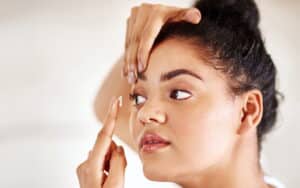
The long-term use of ultraviolet radiation (UVR) blocking contact lenses is helpful in maintaining the eye’s ability to focus, in addition to protecting the critical limbal region, according to a study.

Researchers analyzed the ocular health of 210 pre-presbyopic patients who had worn contact lenses for ≥5 years; half of the patients in this study wore lenses made of material incorporating a UVR-blocking filter. Each group was matched for age, sex, race, body-mass-index, diet, lifestyle, UVR exposure, refractive error, and visual acuity.

Accommodation was measured subjectively with a push-up test and overcoming lens-induced defocus. Objective stimulus response and dynamic measures of the accommodative response were quantified with an open-field aberrometer.

Compared to the control patients, those wearing UVR-blocking contact lenses had lower limbal redness (P = 0.035). Bulbar conjunctival redness was not different between the groups.

The subjective and objective accommodative response was higher in the group of patients wearing UVR-blocking contact lenses, but the differences difference was not significant. In UVR-blocking contact lenses wearing eyes, accommodative latency was shorter (P = 0.003). No significant difference in macular pigment optical density with UVR filtration was found.

The authors concluded that the results suggest “presbyopia may be delayed in long-term UVR-blocking contact lenses wearers.”

Reference
Wolffsohn JS, Dhallu S, Aujla M, et al. International multi-centre study of potential benefits of ultraviolet radiation protection using contact lenses. Cont Lens Anterior Eye. 2022;101593. doi: 10.1016/j.clae.2022.101593. Epub ahead of print. PMID: 35431131.


Share

Related Content

  • Presbyopia

Smartphone reading habits differ between presbyopic and non-presbyopic adults

  • Presbyopia

Spotlight on TECNIS Odyssey™

  • Presbyopia

Drinking habit associated with faster progression of presbyopia in adults

  • Presbyopia

From readers to topical pharmaceuticals: a new dawn in presbyopia care

  • Presbyopia

Modeling and clinical data align on optimal pupil size for presbyopia therapy

  • Contact Lenses

Women in midlife show larger differences between preferred and full refractive correction

Share

Advisory Board

Kaleb Abbott, OD, MS, FAAO

Clark Chang, OD

Jessica Haynes, OD, FAAO, FORS, Dipl ABO

Monica Kalia, OD

Cecelia Koetting, OD, FAAO, DipABO

Roya Attar, OD, MBA, DHA, FAAO

Hardeep Kataria, OD, FAAO

Marc R. Bloomenstein, OD, FAAO

Elise Kramer, OD

See All
Optometry 360

Optometry 360® is a dynamic digital platform dedicated to advancing the field of eye care.

Get to Know Us

  • Home
  • About Us
  • Media Partners
  • Advertising Policy
  • Our Advisory Board

Sign up for our Newsletter

Sign up for our Newsletter to get our newest articles instantly!

  • Privacy Policy
  • Advertising Policy
  • Medical Disclaimer
IHM Logo

© 2026 Optometry 360 is a trademark of International Healthcare Media, LLC. All rights Reserved

  • MedJournal360 Icon
  • RareDisease360 Icon
  • MyHero360 Icon
  • Optometry360 Icon
  • Ophthalmology360 Icon