Optometry 360
  • Home
  • Conferences
  • Videos
  • About Us
    • About Us – Mission
    • Media Partners
    • Advisory Board
    • Industry Council
    • Business Team

What are you looking for?

  • Conference Roundup
  • Contact Lenses
  • Diagnostics
  • Glaucoma
  • Myopia
  • Neurotrophic Keratitis
  • Ocular Surface Disease
  • Pediatrics
  • Practice Management
  • Presbyopia
  • Retina
  • Spotlight Series
The evolving role of the optometrist in nonsurgical cataract management
Optometry 360
  • Home
  • Conferences
  • Videos
  • About Us
    • About Us – Mission
    • Media Partners
    • Advisory Board
    • Industry Council
    • Business Team
Home > Binocular eye-tracking treatment matches patching in amblyopia effectiveness
  • Pediatrics

Binocular eye-tracking treatment matches patching in amblyopia effectiveness

Kelsey Moroz

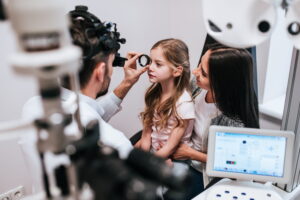
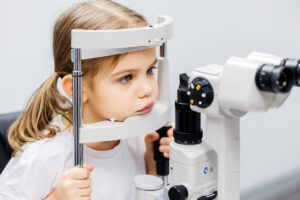
A binocular eye-tracking-based home treatment is at least as effective as the traditional patching method for treating amblyopia in children, with the added benefit of higher treatment adherence, according to a study.

Conducted as a prospective, masked, randomized controlled noninferiority trial, the research included 149 children aged 4 to 8 years who were randomly assigned to either the binocular eye-tracking-based home treatment, CureSight, or patching.

The CureSight group used the system for 90 minutes a day, 6 days a week, over 16 weeks, while the patching group adhered to a 2-hour daily regimen for the same period. The primary outcome measured was the improvement in visual acuity of the amblyopic eye.

The results demonstrated that the CureSight treatment was noninferior to patching in terms of visual acuity improvement. Both treatments led to significant improvements in stereoacuity and binocular visual acuity, with CureSight participants showing higher adherence to the treatment regimen.

Reference
Wygnanski-Jaffe T, Kushner BJ, Moshkovitz A, Belkin M, Yehezkel O; CureSight Pivotal Trial Group. High-adherence dichoptic treatment versus patching in anisometropic and small angle strabismus amblyopia: a randomized controlled trial. Am J Ophthalmol. 2024;S0002-9394(24)00374-X. doi: 10.1016/j.ajo.2024.08.011. Epub ahead of print. PMID: 39179129.

Share

Related Content

  • Myopia

Axial length monitoring may help assess myopia control success in clinical practice

  • Contact Lenses

Extended-wear rigid gas-permeable lenses show long-term viability in pediatric aphakia

  • Myopia

Thirty minutes of tablet use reduces tear film stability in myopic children

  • Diagnostics

Traditional photoscreener outperformed retinal birefringence scanner in pediatric vision screening study

  • Practice Management

Survey finds limited pediatric eye care access for Medicaid patients

  • Myopia

Children with higher myopia show increased peripheral retinal findings

Share

Advisory Board

Kaleb Abbott, OD, MS, FAAO

Clark Chang, OD

Jessica Haynes, OD, FAAO, FORS, Dipl ABO

Monica Kalia, OD

Cecelia Koetting, OD, FAAO, DipABO

Roya Attar, OD, MBA, DHA, FAAO

Hardeep Kataria, OD, FAAO

Marc R. Bloomenstein, OD, FAAO

Elise Kramer, OD

See All
Optometry 360

Optometry 360® is a dynamic digital platform dedicated to advancing the field of eye care.

Get to Know Us

  • Home
  • About Us
  • Media Partners
  • Advertising Policy
  • Our Advisory Board

Sign up for our Newsletter

Sign up for our Newsletter to get our newest articles instantly!

  • Privacy Policy
  • Advertising Policy
  • Medical Disclaimer
IHM Logo

© 2026 Optometry 360 is a trademark of International Healthcare Media, LLC. All rights Reserved

  • MedJournal360 Icon
  • RareDisease360 Icon
  • MyHero360 Icon
  • Optometry360 Icon
  • Ophthalmology360 Icon